UniVision Unified Vision LLMs

UniVision: Unified Vision LLMs

A thread from pixel-level unification to cross-vision synergy

Unified large vision models need more than modality coverage. They need a shared visual reasoning surface. UniVision studies how a single large vision model can coordinate fine-grained perception, generation, editing, and cross-vision reasoning across images, videos, 3D, and richer pixel-level interfaces. The goal is not only to connect modalities, but to let them sharpen each other.

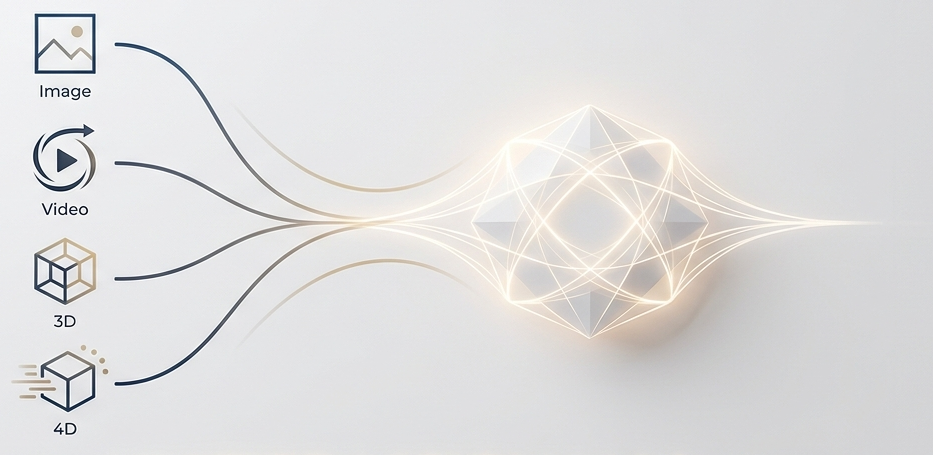
Concept illustration for Unified Vision LLMs

Research Papers

These works study a common question: how should large vision models unify visual functions and modalities without flattening away the specific priors that make each visual source useful?

2024 NeurIPS

Vitron: A Unified Pixel-level Vision LLM for Understanding, Generating, Segmenting, Editing

Vitron is a universal pixel-level vision LLM spanning static images and dynamic videos across four major vision task clusters. Vitron pushes toward a multimodal visual generalist by combining image, video, and regional encoders with backend specialists under an LLM backbone. It is designed to support visual comprehension, generation, segmentation, and editing in a single system, while preserving precise message passing between language reasoning and visual execution.

  • Hybrid instruction passing with discrete text and continuous signal embeddings.
  • Pixel-level spatiotemporal alignment for fine-grained visual capability.
  • Cross-task synergy learning across 12 tasks and 22 datasets.
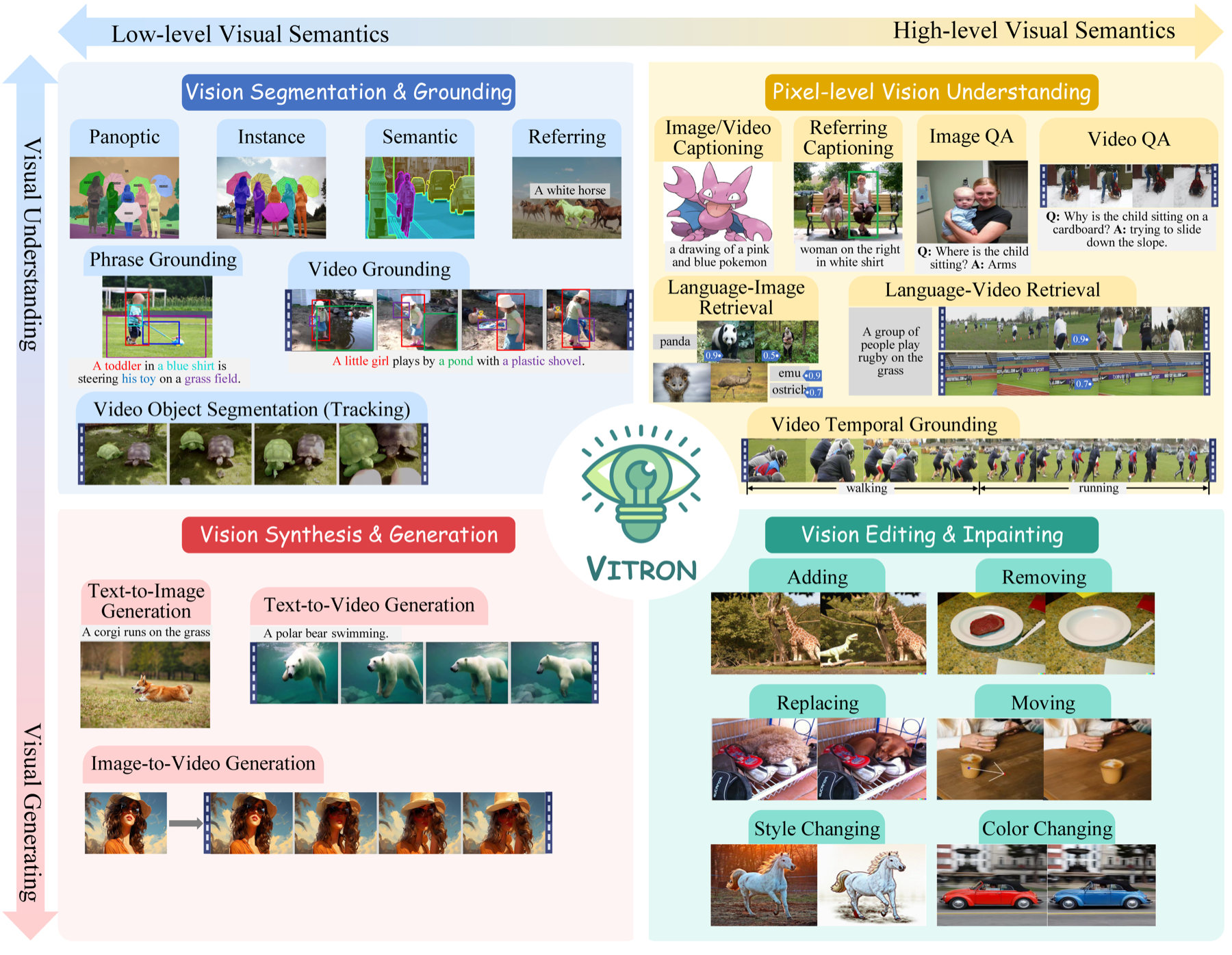
Overview figure for the VITRON paper
2026 CVPR

Poly-V: Modeling Cross-vision Synergy for Unified Large Vision Model

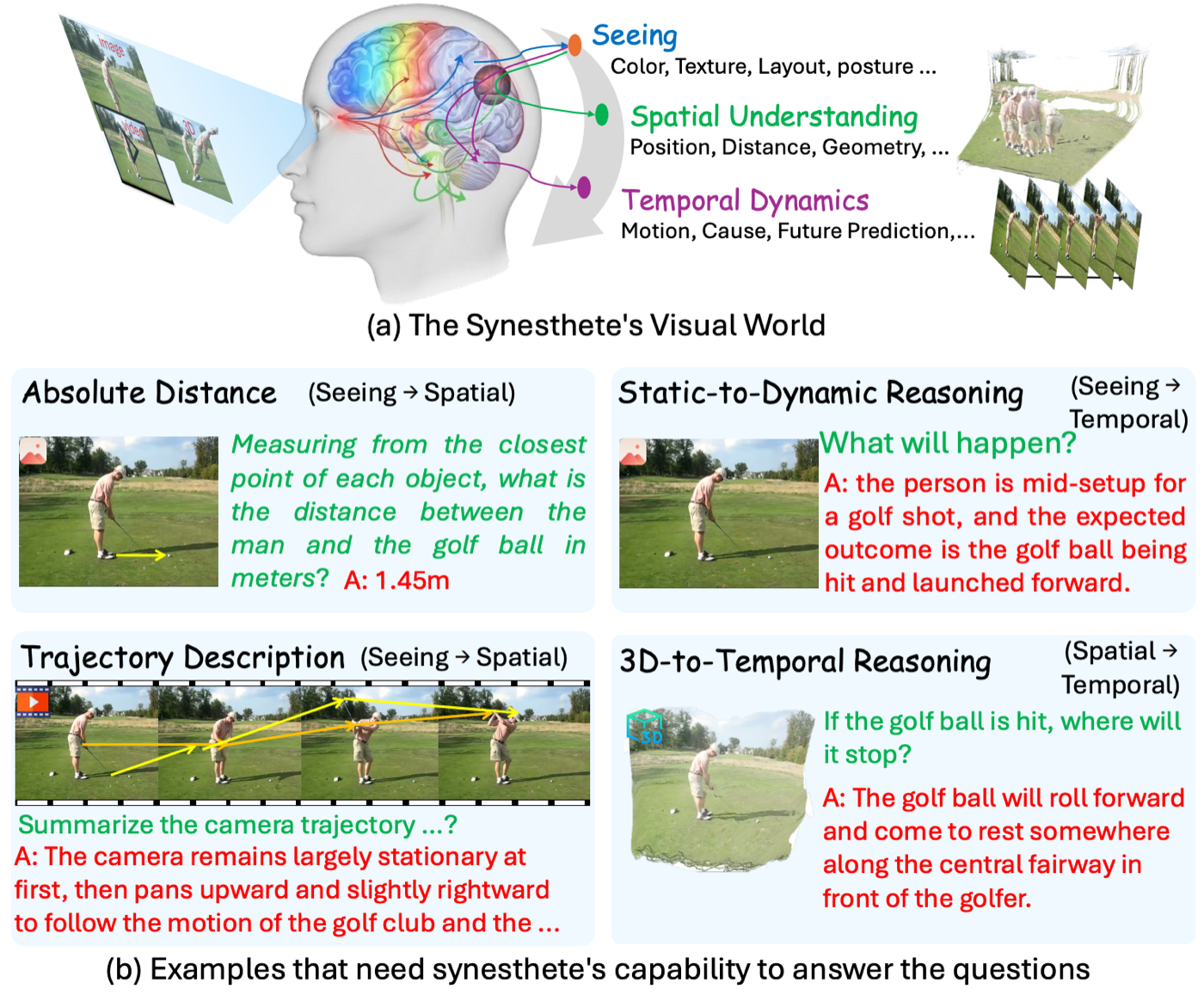
Poly-V is a unified large vision model that treats synergy across image, video, and 3D as a first-class modeling objective. Poly-V argues that true unification is not just functional integration. It builds a sparse Mixture-of-Experts large vision model with a dynamic modality router, then trains it with a synergy-aware paradigm so modality-specific priors can interact, refine one another, and support richer visual reasoning.

  • Sparse experts specialize in modality priors while remaining mutually connected.
  • Synergy-aware tuning combines distillation with object- and relation-level alignment.
  • Strong gains on 10 benchmarks spanning image, video, 3D, and synergy-heavy reasoning tasks.
Overview figure for the Poly-V paper